
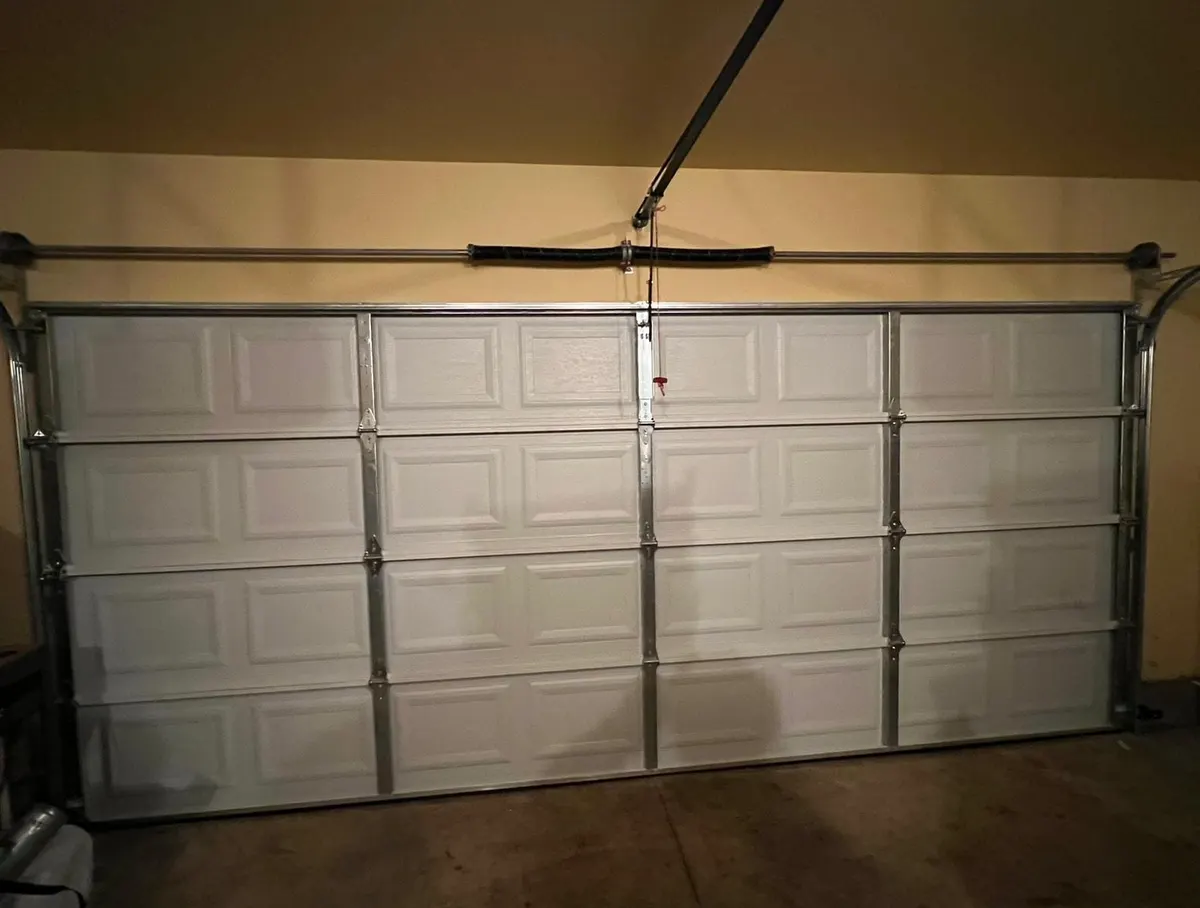
What a technician usually finds on this kind of call
When someone calls about high heating bills and a garage that never feels right, the visit almost always turns up the same thing: daylight showing under the bottom of the door, a flattened or torn rubber seal, and weatherstripping along the sides that's cracked, shrunken, or missing in sections. Sometimes there's a gap big enough to slide a finger under. The homeowner usually didn't notice any of this because the door still opens and closes fine. It's not broken in the way that gets your attention — it's just not sealing anymore.
Why this matters more with an attached garage
An attached garage shares at least one wall, and often a ceiling, with living space. In a lot of homes it also holds the furnace, water heater, or the ductwork that feeds a bedroom or laundry room above it. The garage isn't meant to be heated or cooled like the rest of the house, but it's also not supposed to be a wind tunnel. When the big door seals properly, the garage acts like a buffer: it stays cooler than the house in winter and warmer than the outdoors, which softens the temperature swing on the wall and door that separate it from your living space.
When the seals fail, that buffer stops working. Cold outside air pours in around the bottom and sides of the door, drops the garage temperature close to outdoor levels, and that cold then pushes through the shared wall, the door to the house, and any ductwork or outlets on that wall. Your furnace has to work harder to make up the difference on the other side. In summer the same gaps let hot, humid air in, and your air conditioner picks up the slack.
Why it's worse here than in a lot of places
Lansing winters bring deep cold for weeks at a time, plus snow, ice, and road salt that get tracked in and melt on the garage floor. Every time that door is opened, outside air is exchanged almost instantly, and if the seals are already compromised, that cold air has an easier path to linger and seep inward instead of staying contained. Spring thaw adds mud and moisture that work on rubber seals and wood trim, speeding up the wear. Humid summer storms do the opposite job in the other direction, pushing warm, damp air through the same gaps toward your air-conditioned rooms.
How to settle the argument with a few minutes and a flashlight
You don't need a technician to confirm this part. Try these:
- The daylight test: Close the garage door, turn off the garage lights, and look along the bottom and sides from inside. Any strips of daylight mean air is getting through right there.
- The dollar bill test: Close the door on a dollar bill at a few points along the bottom seal. If it slides out easily with no resistance, the seal isn't making contact anymore.
- The hand test on a cold day: Run your hand slowly along the bottom seal and side weatherstripping. A steady stream of cold air is easy to feel and hard to argue with.
- Look at the wall and floor above/adjacent to the garage: A consistently colder wall, cold floor in the room above, or a chilly spot near outlets on the shared wall often traces back to garage air leakage, not a drafty window.
What's actually causing the gap
A few usual suspects, often more than one at once:
- Bottom seal (astragal): Flattens, cracks, or tears with age and with the door running over salt and grit all winter. This is the single biggest air leak point on most doors.
- Side and top weatherstripping: Dries out and shrinks, especially after repeated freeze-thaw cycles.
- Warped or uneven panels: Older steel or wood doors can bow slightly over time, leaving gaps that no amount of new weatherstripping will fully close.
- Poor door balance: A door that isn't balanced correctly may not sit flush against the seals even when fully closed, which shows up as a draft that comes and goes depending on temperature.
Weighing the fix
Replacing a bottom seal and weatherstripping is inexpensive compared with almost anything else that happens to a garage door, generally a modest parts-and-labor cost in the lower end of typical repair ranges, and it solves the problem outright if the door itself is straight and balanced. If the door is older, uninsulated, or visibly warped, sealing alone will help but won't get you all the way there — at that point a full door replacement with an insulated model is the better long-term move, at a materially higher upfront cost but a real difference in comfort and energy use for the life of the door.
When to call Lansing Garage Door
If the flashlight and dollar bill tests confirm a leak, or if you're not sure whether the issue is the seals or the door itself, that's a good time to call. As part of routine Garage Door Maintenance, we check the bottom seal, side and top weatherstripping, and door balance, and replace what's worn before it costs you another season of higher bills. If the door is older or visibly out of shape and sealing won't solve it, we'll walk you through options as part of a Garage Door Installation, including insulated models built for the swings between a Lansing winter and summer.
Settle it for good — call Lansing Garage Door for a seal and balance check anywhere in Lansing, MI and the surrounding area.