
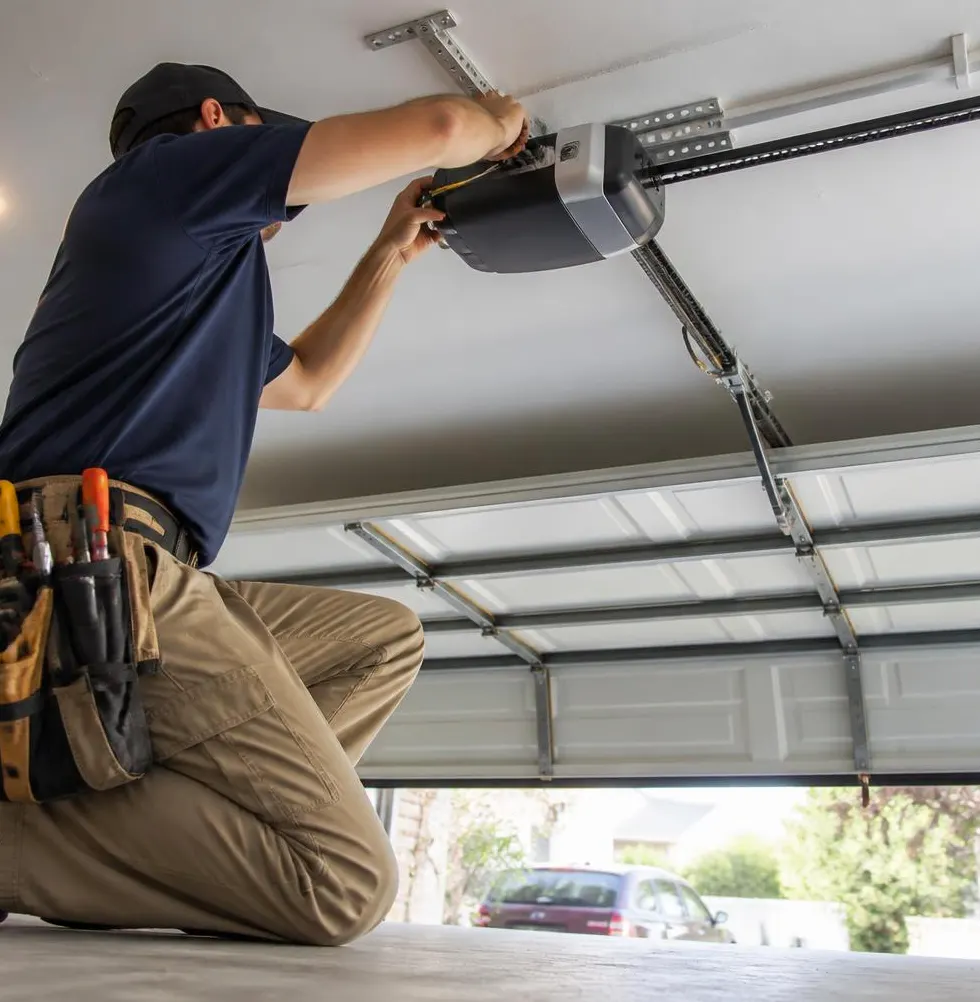
A Familiar Call During Winter Storm Season
Our technicians get a version of this call every time a storm knocks out power in the Lansing area: a homeowner pulled the emergency release cord to get the car out, left the door disconnected for days, and now the opener won't grab the door again. Or someone forced the door up while it was coated in ice, strained something in the track, and now it binds halfway. Most of these situations are preventable with the right steps, done in the right order.
Tools You'll Need
- A step stool if you can't comfortably reach the release cord
- A flashlight or headlamp (power outages rarely happen in good light)
- Work gloves, especially in cold weather when hands lose grip fast
- A pair of locking pliers or a C-clamp, useful if you need to hold the door open
- Someone to help steady the door on heavier insulated models
Step-by-Step: Opening the Door Manually
- Locate the emergency release cord. It's the red handle hanging from the trolley on the track that runs along your garage ceiling.
- Make sure the door is fully closed before you pull it. Disengaging the opener while the door is partway up can let it drop suddenly.
- Pull the cord straight down and toward the door. You'll hear or feel the trolley disconnect from the opener carriage.
- Lift the door slowly using both hands, keeping your fingers off the panel seams. A properly balanced door should rise fairly smoothly and stay open roughly where you leave it once it's above waist height.
- If the door feels unusually heavy, jerks, or won't stay up on its own, stop lifting. That's a sign the springs aren't holding tension the way they should, and forcing it further can cause the door to slam down unexpectedly.
- If you need the door to stay open, clamp a pair of locking pliers onto the track just below the bottom roller on each side. This keeps the door from sliding closed while you're loading or unloading a vehicle.
Step-by-Step: Closing the Door Manually
- Remove any clamps or props holding the door open.
- Guide the door down evenly with both hands, keeping it moving at a steady pace rather than letting it drop.
- Make sure the bottom edge seats fully against the floor and the weatherstripping compresses evenly on both sides. In winter, ice buildup on the threshold can keep one side from closing all the way.
- Leave the door disengaged until power returns if you'll be opening and closing it more than once during the outage.
Re-Engaging the Opener Once Power Returns
- Confirm the door is fully closed first. Reconnecting the opener while the door is partly open can cause it to move unexpectedly when power is restored.
- Pull the release cord toward the opener (or follow your model's instructions) until you hear the trolley click back into the carriage.
- Test the door with your remote or wall button and watch it through a full open-and-close cycle.
- It should move smoothly, without grinding, hesitating, or reversing on its own.
What's Fine to Handle Yourself
Manually opening and closing the door, propping it safely, and reconnecting the trolley are all normal homeowner tasks. Most people can do this without any tools beyond what's listed above.
What Needs a Technician
- The door feels suddenly heavy, light, or uneven when lifting it by hand — this usually points to a spring problem, not an opener problem
- The door won't stay open on its own partway up
- The track is visibly frozen, bent, or the door grinds instead of sliding
- The opener won't reconnect to the trolley, or reconnects but the door reverses or stops mid-cycle
- Cables, pulleys, or hardware look stretched, frayed, or out of place
None of these are safe to force. Garage door springs hold a lot of stored tension, and a cable or spring that lets go while someone is under the door can cause serious injury.
Why This Matters More in Lansing's Winters
Deep cold, snow, and road salt all add stress to a garage door system that's already working overtime. Ice on the threshold or track can make a door feel stuck even when the opener and springs are fine, and the temptation is to force it. Cold also makes metal more brittle and lubricant thicker, so parts that are already worn tend to show it first during a storm — which is exactly when you don't want a surprise.
When to Call Lansing Garage Door
If your door felt off balance during a manual lift, wouldn't stay open, or the opener won't reconnect properly after the power came back, it's worth having it looked at before the next outage. Our garage door opener service can diagnose reconnection issues and sensor problems, and if the door felt unusually heavy or light, our spring replacement service addresses the actual cause rather than just getting you through one storm.
If you're dealing with a garage door that's acting up after a power outage anywhere from Lansing to East Lansing, Okemos, Holt, or Grand Ledge, give Lansing Garage Door a call — we'll get it sorted before the next storm rolls through.