
The Short Answer
Your garage door is almost certainly the largest opening in your home's exterior walls, and it's built to roll up and down, not to resist wind pressure the way a framed wall does. When a storm front pushes hard against it, a weak, unbalanced, or poorly secured door can buckle, pop off its track, or blow inward — and once that happens, wind gets inside the structure and can lift the roof or blow out windows from the pressure change. Fall, before the harder winter winds and lake-effect systems roll through mid-Michigan, is the right time to check it.
Why the Garage Door Is the Weak Point
A typical garage door panel is made of thin steel or aluminum skins over insulation or a hollow core, held in place by a track system and a set of rollers — not studs, sheathing, and siding. It's also wide: most residential doors span 9 to 16 feet, which means wind load across that surface adds up fast compared to a window or a solid wall section. Add in aging hardware — stretched cables, worn rollers, a bent track from years of use — and the door has less margin before it fails under pressure.
This matters more here because mid-Michigan gets a real mix: humid summer storms with gusty straight-line winds, a fall stretch where severe weather can still roll through before winter, and then a cold season of deep freeze, snow load, and ice that stresses hardware in a different way. A door that's marginal going into October is more likely to have a bad night in a November or December wind event.
What to Check Before the Next Windy System
Panels and Seams
Walk around the door and look for dents, warping, or separation at the panel seams. A single dented panel can throw off the whole door's structural integrity, since the panels work together to resist bowing. If you see daylight at the seams when the door is closed, that's a sign the panels aren't seating properly anymore.
Tracks and Rollers
The tracks should be straight and firmly bolted to the frame. Give them a visual check for rust, bends, or loose brackets — road salt spray and winter moisture can corrode hardware over a few seasons. Worn or cracked rollers let the door rattle in its tracks, and a door that already moves loosely in calm weather has less resistance to offer in a gust.
Springs and Balance
Disconnect the opener and lift the door by hand halfway. It should stay in place on its own. If it drops or shoots up, the springs are out of balance, which means the opener and hardware are compensating under more strain than they should be — not a great position to be in when wind adds extra load. Don't attempt to adjust torsion springs yourself; they're under heavy tension and this is a job for a technician.
Weatherstripping and Bottom Seal
Cracked or missing weatherstripping doesn't just let cold air and mud-season moisture in — it also means wind can get a grip under the door edge, which adds lift. A fresh bottom seal is a cheap fix that pays off both for storm resistance and for keeping winter drafts out of the garage.
Opener and Backup Power
If a storm knocks out power, a door without a battery backup can leave you stuck closed or open. Battery backup units let the opener keep working during an outage, which matters for both storm season and the ice-related outages that sometimes follow winter weather here.
Bracing for Older or Wide Doors
If your home has an older door or a wide double-car opening without reinforced struts, a wind-rated door or an aftermarket bracing kit is worth asking about. These add horizontal reinforcement to the panels so the door resists bowing inward under pressure, which is the actual failure mode in most storm-related garage door damage.
A Fall-to-Winter Checklist
- Lift-test the door by hand to check spring balance
- Inspect tracks and rollers for rust, bends, or looseness
- Replace cracked weatherstripping and the bottom seal
- Tighten loose hinges, brackets, and track bolts
- Confirm the opener has battery backup and test it
- Ask about reinforcement if the door is older or unusually wide
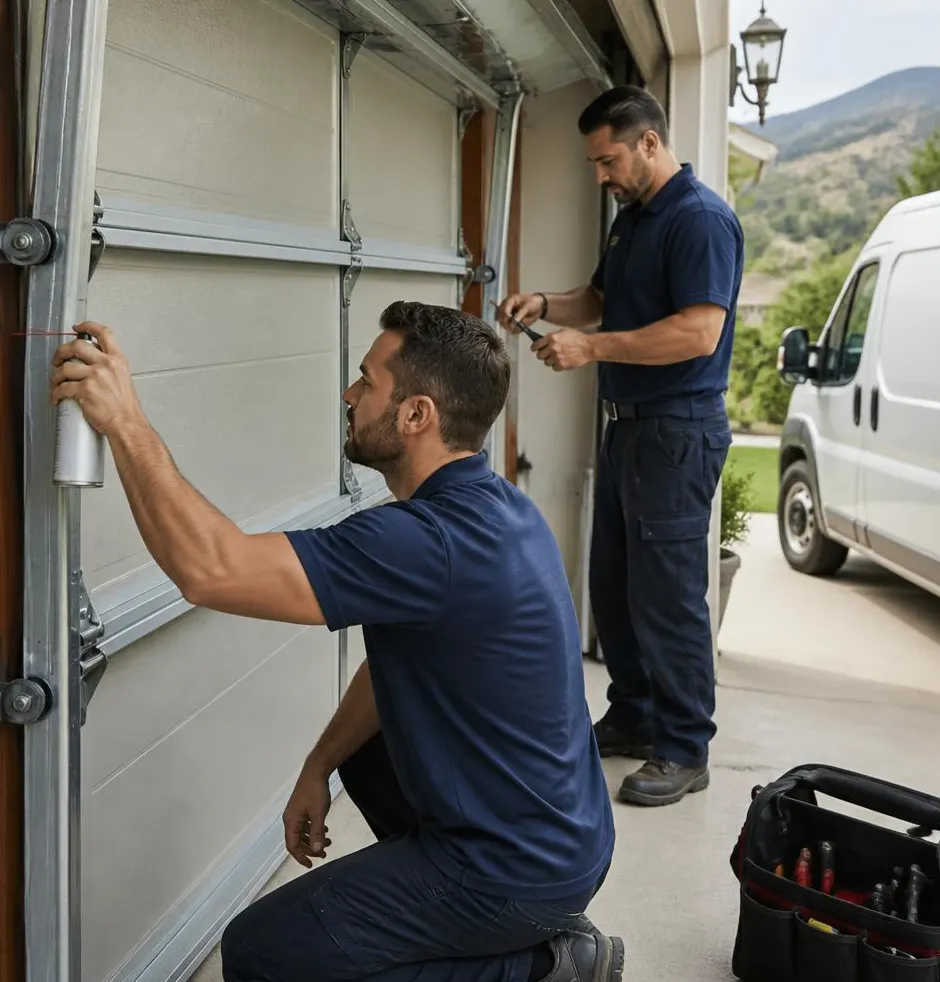
- Lubricate moving parts before cold weather thickens grease and slows mechanisms
When to Call Lansing Garage Door
If your door fails the hand-lift balance test, shows rust or wear on the track, or you just want it checked before the next round of fall storms, that's a good time to call. Our Garage Door Maintenance visits cover a full inspection of springs, cables, tracks, rollers, and opener function, catching the kind of wear that turns into a wind-related failure later. If the door itself is old, dented, or undersized for what mid-Michigan winters and storms put it through, our Garage Door Installation service can get you into a door built with proper wind resistance and insulation, sized right for your opening. Either way, it's better to find the weak point on a calm afternoon than during a storm.
If you're in Lansing, East Lansing, Holt, Okemos, DeWitt, Mason, Grand Ledge, or Haslett and want your garage door checked before the season turns, call Lansing Garage Door today to schedule a visit.