
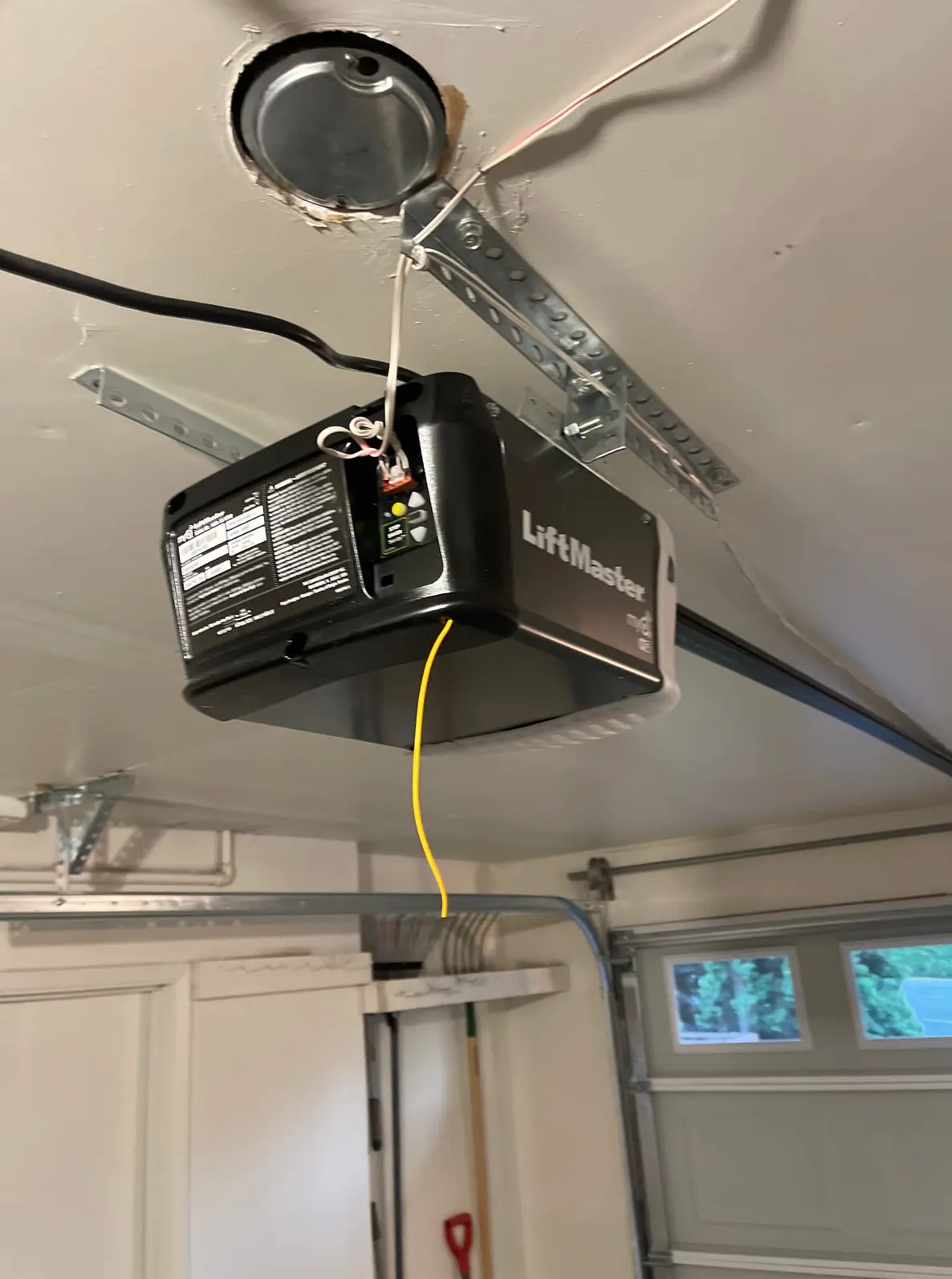
If you just want the short answer: belt-drive is the best all-around pick for most Lansing-area homes, especially if the garage sits under or beside a bedroom or living space. Chain-drive is the cheapest and toughest option and makes sense for detached garages where noise doesn't matter. Screw-drive splits the difference on price but needs a bit more attention in cold weather. Direct-drive is the quietest option available and worth the extra cost if silence is your top priority. Here's how each one actually stacks up.
Chain-Drive: Loud, Cheap, Long-Lasting
A chain-drive opener pulls the trolley along a metal chain, the same basic idea bicycles use. It's the most common opener on older homes because it's affordable and handles heavy doors without complaint. The trade-off is noise: metal-on-metal contact transmits vibration into the ceiling joists, which you'll notice if the garage is attached to a bedroom above or beside it. On the plus side, chain-drive units are mechanically simple, tolerant of temperature swings, and often the longest-lasting option when properly lubricated. If your garage is detached, or the attached garage doesn't share a wall with living space, chain-drive is hard to beat on value.
Belt-Drive: Quiet, Mid-Priced, Dependable
Belt-drive openers use a reinforced rubber or polyurethane belt instead of a chain. The motor and drive mechanism are otherwise nearly identical to chain-drive units, but the belt absorbs vibration instead of transmitting it, so operation is noticeably quieter. The price premium over chain-drive is modest, typically a step up rather than a leap, and lifespan is comparable when the belt is kept clean and free of road salt residue. The one real weakness is that extreme cold can stiffen the belt material slightly, so on the coldest mornings you may notice a touch more resistance or a faint creak until it warms up. For attached garages, especially ones near a kids' room, home office, or anywhere someone sleeps past sunrise, belt-drive is usually the right default.
Screw-Drive: Fewer Parts, More Temperature Sensitivity
Screw-drive openers move the trolley along a threaded steel rod rather than a chain or belt. Fewer moving parts generally means less to wear out, and these units run at a moderate noise level, somewhere between chain and belt. The catch for this part of Michigan is temperature: the lubricant on the screw mechanism thickens in deep cold, which can slow the door down or make the motor strain on sub-zero mornings. Manufacturers make cold-weather grease for exactly this reason, but it's an extra maintenance step most homeowners forget about until the door starts groaning in January. Screw-drive works fine here, but it rewards owners who actually do the annual lubrication rather than ignoring the opener until something breaks.
Direct-Drive: Quietest, Priciest, Fewest Moving Parts
Direct-drive openers take a different approach entirely: instead of a trolley dragging along a rail, the motor itself travels along a stationary chain inside the rail, and the only other major moving part is the motor housing. This design produces the lowest vibration and noise of any opener type, which is why it's popular for homes with bedrooms directly above the garage. The trade-off is upfront cost, direct-drive units sit at the top of the price range, generally well above chain-drive and noticeably above belt-drive. Lifespan tends to be excellent precisely because there's so little to wear down, but if something inside the sealed motor unit does fail, repairs often mean replacing the whole head rather than a simple part swap.
Side-by-Side at a Glance
- Chain-drive: Loudest, lowest cost, very long lifespan, best for detached garages.
- Belt-drive: Quiet, moderate cost, long lifespan, best general-purpose pick for attached garages.
- Screw-drive: Moderate noise, moderate cost, needs cold-weather lubrication to perform well here.
- Direct-drive: Quietest by far, highest cost, excellent lifespan, simplest to repair for minor issues but costlier if the head itself fails.
What Our Winters and Spring Thaw Do to Each Type
Deep cold, road salt, and the spring mud season all put extra stress on whichever opener you choose. Salt brine tracked in on tires settles on the rail and trolley hardware over the winter and, left alone, speeds up corrosion on any drive type. Chain-drive is the most forgiving of grime buildup since it's built for heavier-duty use, but it still needs periodic cleaning and lubrication. Belt-drive systems should stay free of salt crust on the rail so the belt doesn't drag. Screw-drive is the most sensitive to temperature and benefits most from a cold-rated lubricant before the first hard freeze. Direct-drive, with its enclosed design, tends to shrug off road salt and winter grime better than the others simply because less of the mechanism is exposed.
Our Recommendation for Typical Lansing-Area Homes
For a standard attached garage in Lansing, East Lansing, Okemos, or the surrounding townships, belt-drive hits the sweet spot of quiet operation, reasonable price, and solid lifespan without the cold-weather maintenance demands of a screw-drive. If your garage is detached or far from living space and budget matters most, chain-drive is a perfectly sound choice. If noise is a dealbreaker, say the garage sits under a bedroom, go direct-drive and treat the extra cost as a one-time investment in a quieter house.
When to Call Lansing Garage Door
If you're not sure which opener type you currently have, if your existing unit is struggling in cold weather, or if you're ready to upgrade from a worn-out chain-drive to something quieter, our team can walk you through the options in person. We handle both garage door opener service for existing units and full garage door installation when it's time to replace the opener and the door together. We'll look at your garage's layout, how it's used, and what's failed in the past before recommending a drive type, rather than defaulting to whatever's cheapest to stock.
Ready to compare openers for your home? Call Lansing Garage Door today, we serve Lansing, East Lansing, Holt, Okemos, DeWitt, Mason, Grand Ledge, and Haslett.